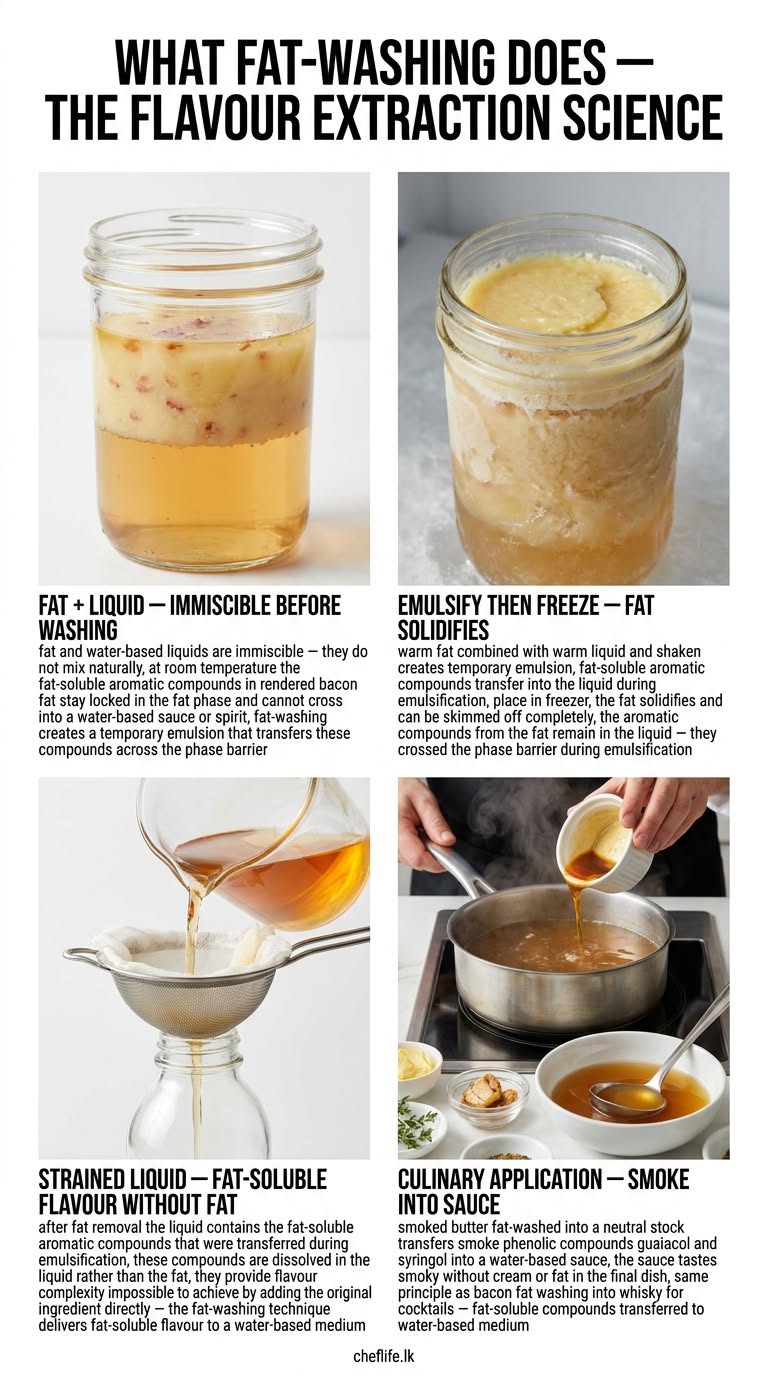
Fat-washing transfers fat-soluble flavour compounds from one ingredient through a fat medium and into a water-based liquid. The result is a water-based liquid that contains flavour compounds that physics says should not be there.
Fat-soluble aromatic compounds and water-based liquids normally cannot mix. This is simple chemistry — like dissolves like. Fat-soluble compounds dissolve in fat. Water-soluble compounds dissolve in water. The two do not cross over.
Fat-washing exploits a temporary emulsion to circumvent this rule.
Warm rendered fat — which contains dissolved fat-soluble aromatic compounds — is combined with a warm liquid and emulsified through vigorous shaking or blending. In the emulsified state the fat is broken into microscopic droplets dispersed throughout the liquid. The fat-soluble aromatic compounds exist at the boundary between the fat droplets and the surrounding liquid.
During the emulsion the compounds slowly transfer across this boundary into the liquid phase. The longer the emulsion is maintained before separation the more complete the transfer.
The emulsion is then frozen. The fat solidifies and floats to the top where it can be skimmed off completely. The aromatic compounds that transferred during emulsification remain in the liquid — they are now dissolved in the water phase where they were transferred.
The result is a water-based liquid with the fat-soluble aromatic profile of the original fat ingredient — without the fat itself.
Bacon-fat washed bourbon. Smoked butter washed into stock. Truffle oil washed into consommé. All the same principle.