|
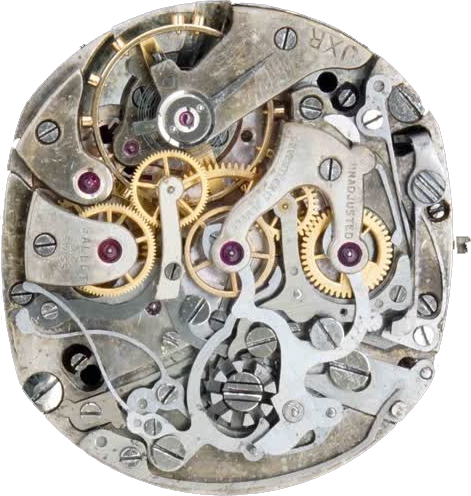
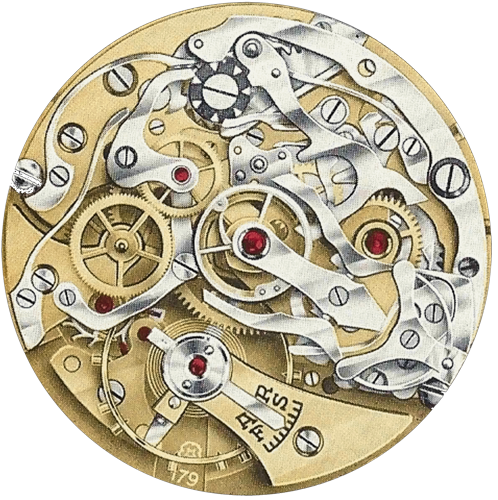
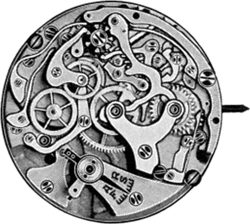
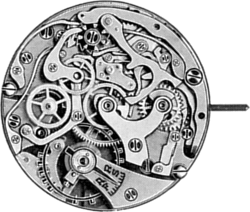
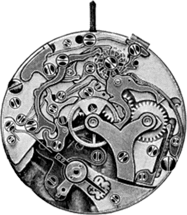
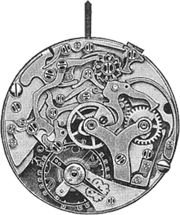
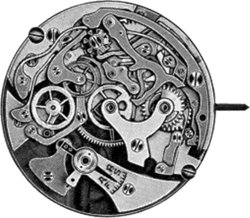
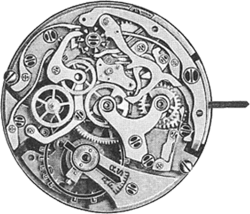
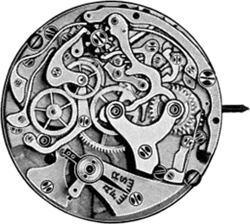
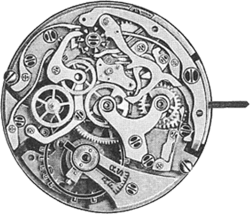
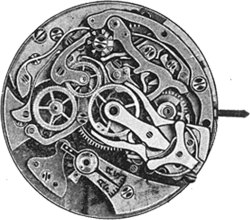
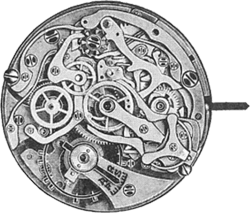
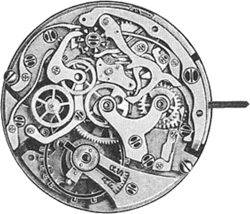
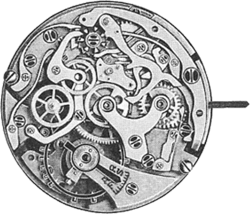
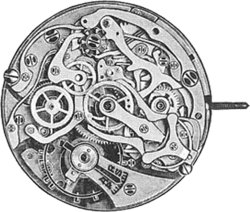
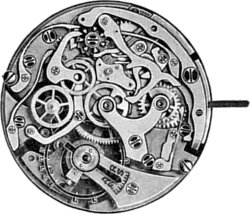
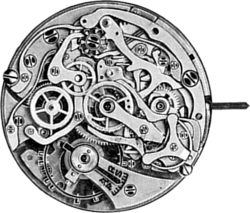
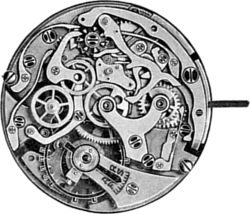
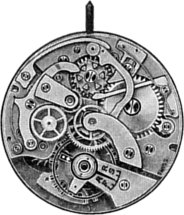
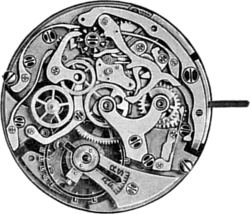
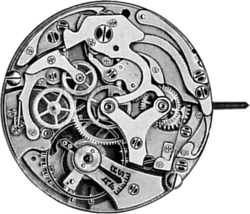
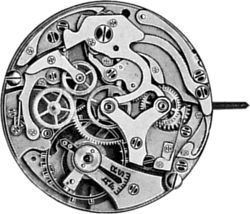
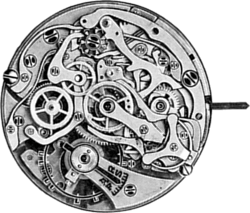
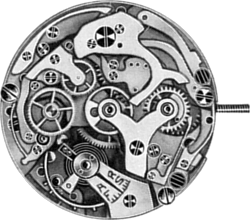
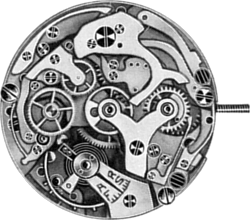
The famous ebauche manufacturer, Landeron, began as the watch manufacturer Hahn Freres et Cie in 1875. The name changed to Charles Hahn et Cie before the 1900's.
Hahn had originally built watches, but ventured into selling ebauches in 1921, using the 'Landeron' marketing label (after their location in Le Landeron, Neuchâtel), because buyers of these ebauches were rival watchmakers who obviously didn't want the brand 'Hahn' marked anywhere on their stuff.
With Hahn's revenue increasingly dominated by sales of movements rather than sales of watches, the company name was adapted to the mark of its hottest-selling product, and they registered the name Hahn Landeron. They bought some of Anatole Breitling's designs and started manufacturing chronograph watches, and built a tremendous reputation for solid quality.
The emerging Great Depression was forcing consolidation of watch and ebauche houses: notably combining Adolph Schild S.A., Adolphe Michel S.A. and Fabrique Horlogerie du Fontainemelon (FHF) in 1926 under a new entity "Ebauches S.A." (ESA), which in turn would acquire Hahn Landeron the following year of 1927.
Other famous watchmakers were joined under ESA, but ESA would itself be forced by a collapsing global economy to join under another entity, Allgemeine Schweizerische Uhrenindustrie AG (ASUAG) in 1931. ASUAG's chief rival was Société Suisse pour l’Industrie Horlogére SA (SSIH) which was comprised initially of Omega and Tissot, before other watch brands like Lemania and Hamilton were added.
The quartz crisis of the very late 70's forced yet further consolidation. Swiss banks holding loans to ASUAG and SSIH forced them to merge in 1983, and then assigned a manager (Nicolas Hayek) to restructure the conglomerate to profitability. The new entity formed was the Société de Microélectronique et d'Horlogerie (SMH), which was later renamed after its best-selling product/brand, Swatch, in 1998.
Now...
Up until the banks took control, Landeron had remained a real, trademarked entity within ESA and then ASUAG, but after Hayek took over, a single ebauche maker (originally in ASUAG, alongside Landeron) was selected to take over nearly ALL ebauche production for watches under SMH/Swatch: Hayek selected ETA, which had been the movement manufacturing affiliate of Eterna under ASUAG.
Almost all other ebauche manufacturer brands in SMH/Swatch's portfolio were neglected. Landeron was one of them, losing its trademark status in the early 2000's, just a few years after SMH was renamed as Swatch. The name 'Landeron' was thus/then publicly up for grabs.
Enter "Landeron Watches", an entity registered in 2004 by a French ebay seller named Dan Elgrably, who had been ebay-selling frankens, marriages and new-design watches years prior. Mons. Elgrably has also used Kickstarter to market his 'Landeron Watches', which mostly use Chinese ebauches. - Horg
|
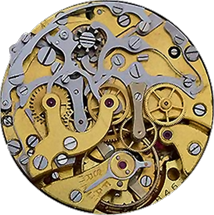
1884: Alfred Lugrin, self-taught watchmaker, moved to Le Sentier with four people to assemble chronographs on movements in the form of blanks from the Hahn house in Landeron.
1890: Construction of a Lugrin factory in L'Orient, where various operations were carried out, such as pointing, drilling, tapping, milling, contouring and finally assembly.
1895: Alfred Lugrin was commissioned by a house in Besançon to manufacture a chronograph-counter of his invention.
1900: The company manufactures complete watches.
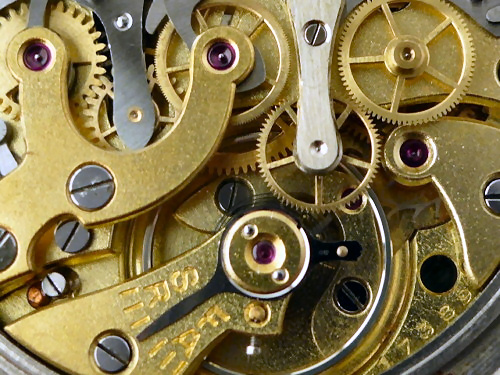
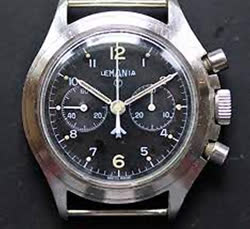
1906: The Lémania brand is registered.
1908: Opening of reassembly workshops and a sales office in La Chaux-de-Fonds.
1912: Marius Meylan was hired and modernized the company.
1915: Appearance of the first wrist chronographs for a GP contract to the Italian Navy.
1917: Marius Meylan, married the daughter of Alfred Lugrin.
1920: Death of Alfred Lugrin, Marius Meylan takes over the reins.
1932: Lémania Lugrin S.A à L'Orient joined the Société Suisse pour l'Industrie Horlogère S.A (SSIH), then headquartered in Geneva. This company grouped the Brands Omega, Louis Brandt & Frères S.A de Bienne and Charles Tissot & Fils S.A du Locle.
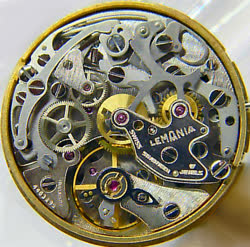
1942: Appearance of the famous 27 CH caliber, which at Omega becomes the 321, the Speedmaster model.
1949 and 1956: Expansion of the premises.
1980: Following the difficulties it encountered, the SSIH decided to close the Lémania factory.
1981: The company, in the hands of a private group of shareholders, resumed its activities under the new corporate name: Manufacture d'Horlogerie Nouvelle Lémania SA.
The manufacture at the time was the first manufacturer of mechanical chronographs. But it also dealt with complicated mechanical and electronic watches, perpetual calendars, minute repeaters, tourbillons, extra-thin calibers, mechanical time counters for sport and industry.
1982: La Nouvelle Lémania, takes over Heuer-Léonidas.
1985: The company TAG (Technique d'Avant Garde), an important holding company based in Jersey, founded in Luxembourg in 1977 by the Saudi-Syrian businessman Akram Ojjeh, buys the two factories to create Tag Heuer.
1992: The Investcorp group (Persian gulf), owner of Breguet, buys the Nouvelle Lémania.
1999: The Swatch Group takes over Breguet and Lemania.
By 1936 half a million chronograph movements had been made by them, primarily for Omega.
|
|
|
|
Chinese copy of a Venus 175.
|
Founded in 1901 by brothers John and Charles Reymond in Les Bioux, the company operated under the name ‘Reymond Frères SA’ until 1929 when it became known as ‘Valjoux SA’ named after the Callee de Joux in whcih they were located - this was the complicated movement heart of Switzerland. Making only complicated movements, triple dates, chronographs, timers and rattrapantes, caliber 22 debuted in 1914 and remained in production for sixty years. However, it was the smaller, 13 ligne caliber 23 developed in 1916 that changed the world of wrist chronographs, finding its way into chronographs for Patek Philppe, Audemars Piguet, Bulova, Rolex and Vacheron. Production of this ebauche lasted for sixty years until 1974. It is estimated that 125,000 ebauche movements of this type were made
|
|
|