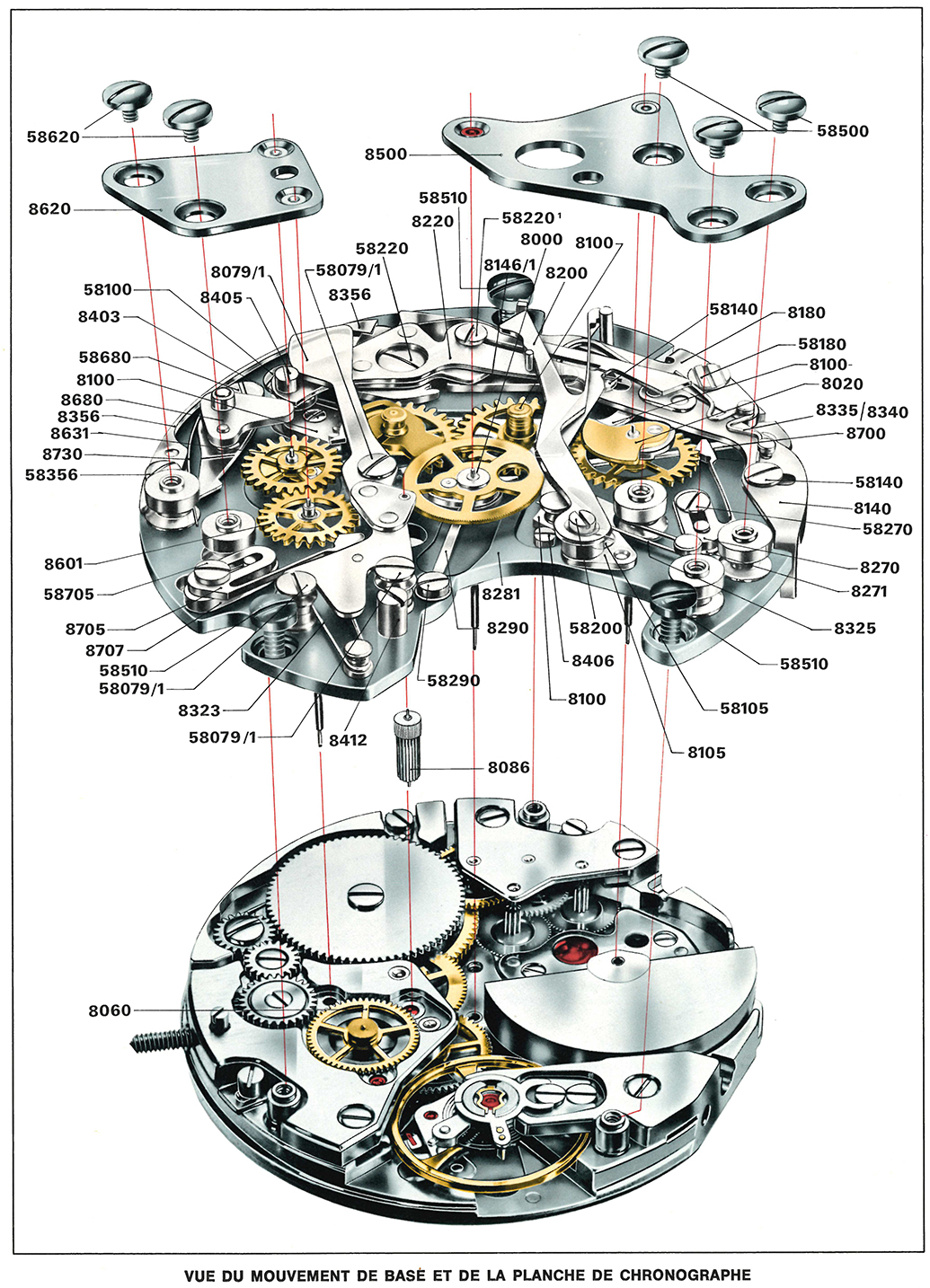
 The Caliber 11 is a 17-jewel modular chronograph measuring 31mm x 7.7mm. This modular architecture implies first a base movement, a micro-rotor automatic caliber made by Büren, in charge of the timekeeping part. Beating at 19,800 vibrations per hour, it boasted 42 hours of power reserve. Manufactured by Dépraz, the lever chronograph module is assembled on the backside of the base movement. This movement has a bi-compax display, with a 30-minute counter at 3 o’clock and a 12-hour counter at 9 o’clock – no running seconds sub-dial. The date is indicated at 6 o’clock. The unusual crown position, at 9 o’clock at the opposite of the chronograph pushers, is a signature feature of the movement.
|
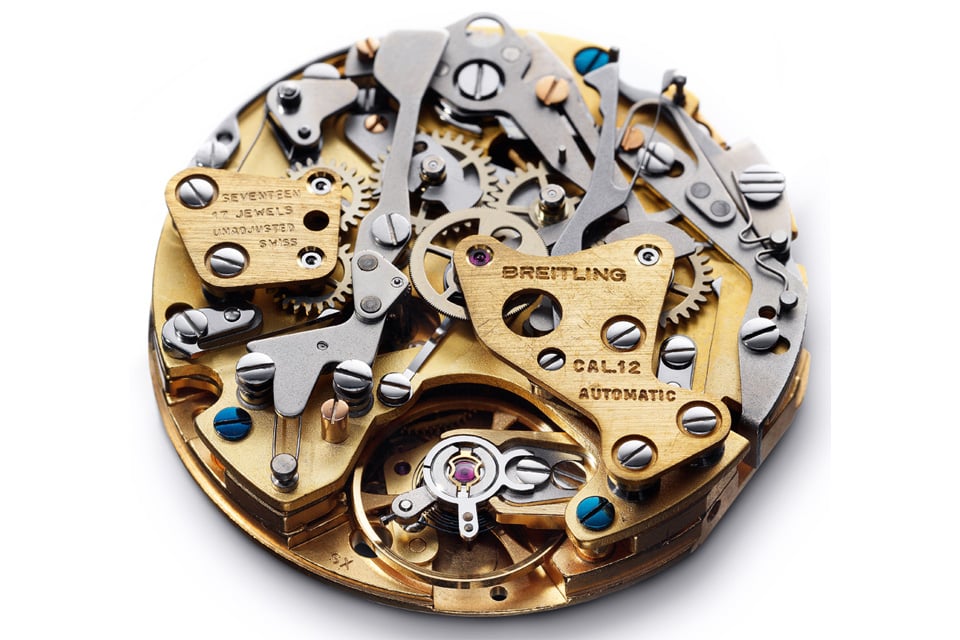 In 1971, a variant running at 21,600 vibrations per hour and named Calibre 12 is introduced. It becomes the main product of the calibre family. It uses a stronger barrel spring. The gear train and balance wheel are adapted. The chronograph hammer is modified to improve shock-resistance. |
|
The Calibre 13 is developed to integrate a small seconds indication in the periphery of the hour counter but will never be commercialized |
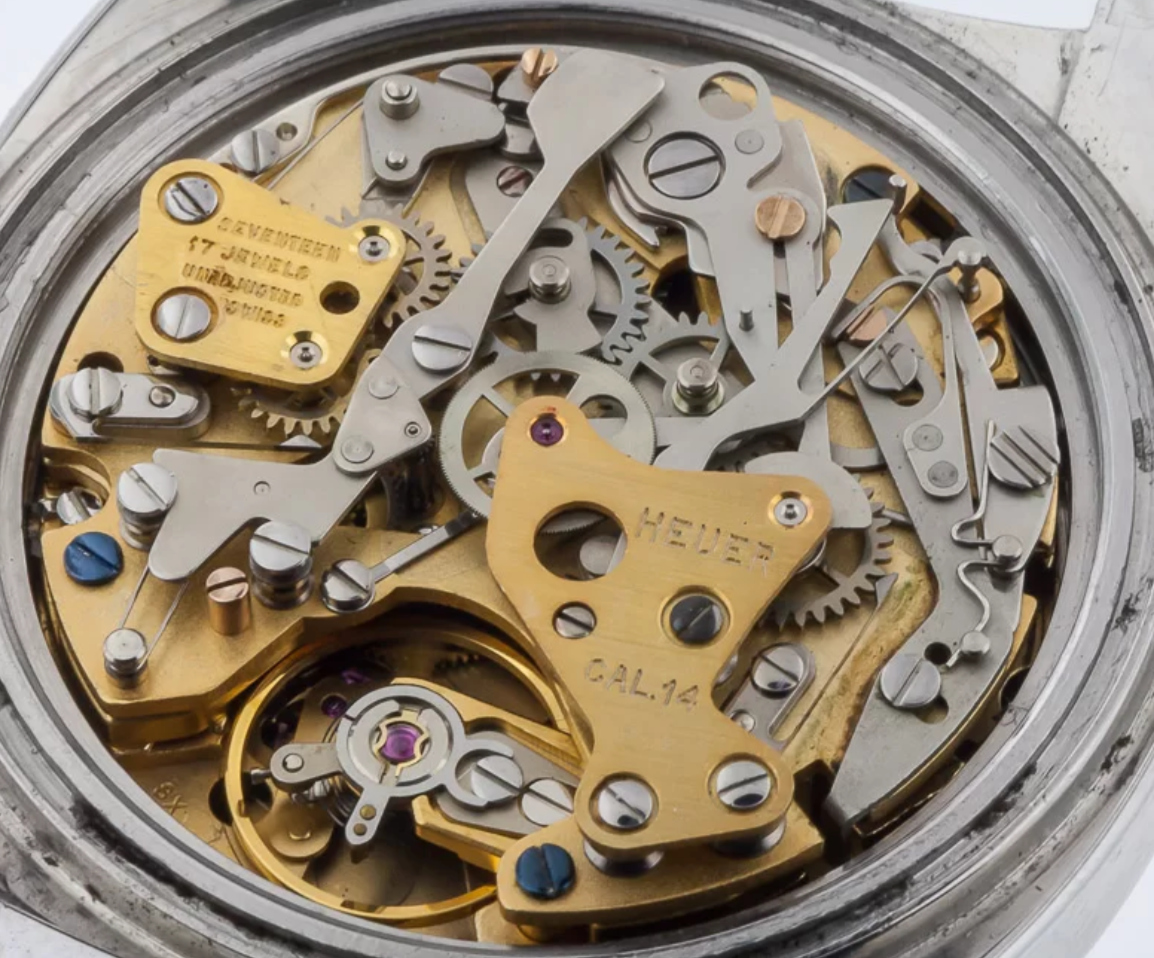 In 1972, the Calibre 14 adds a GMT function and the Calibre 15 adds a small seconds to the Calibre 12, positioned at 10 o’clock, replacing the elapsed hours sub-counter. |
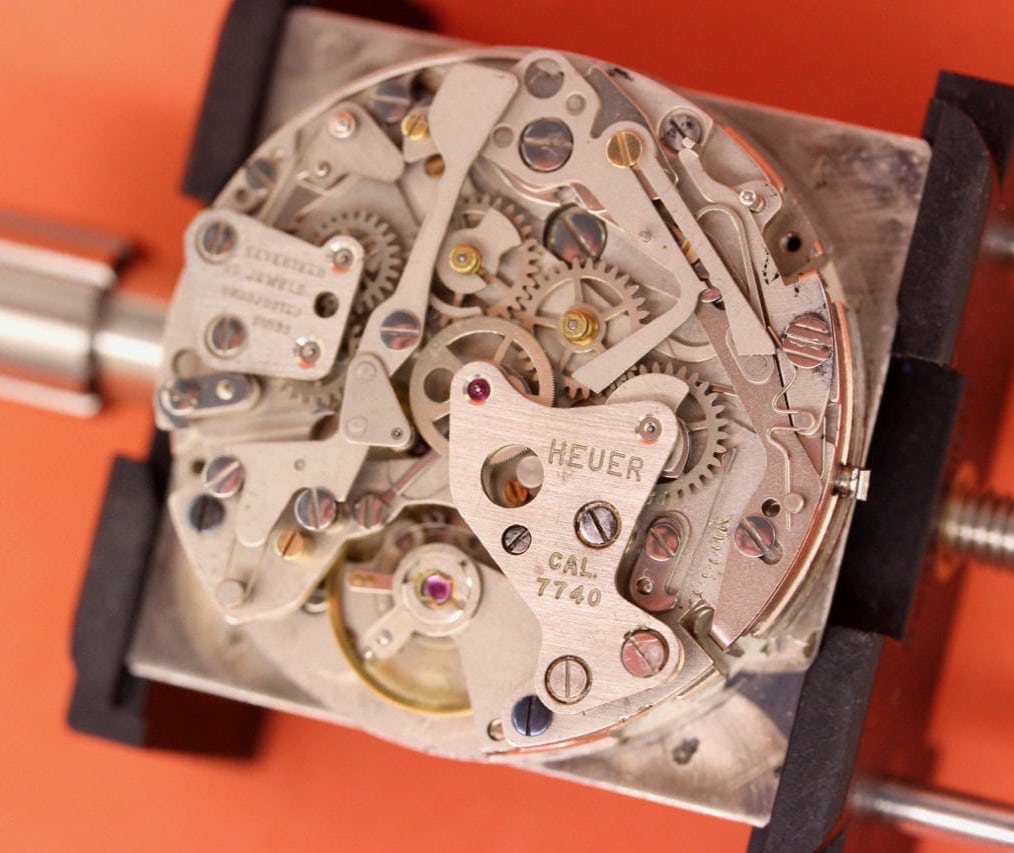 Valjouz threw away the Buren microrotor bits, and used just the chrobnograph, adding a manual wind calling it Cal 7740. From this would would come two important things: 1) the Valjoux 77xx movement and 2) the Dupuis Depraz Chronograph module; both still around today. |